- Suburb
- Minchinbury, NSW 2770
- Job
- Single to three phase upgrade + 22kW EV charger
- Completed
- 26 October 2026
- On site
- 7h 46m
- Service
- EV Chargers
Most EV charger jobs start and finish at the switchboard. This one started under the driveway.
The owners of a home in Minchinbury, in Sydney’s west, wanted a Zappi charger that could charge at 22kW rather than the 7kW a single phase supply allows. That is the difference between topping up overnight and putting a useful amount of range back in a couple of hours. The charger itself was never the hard part. Getting three phase power to the house was.
What three phase actually means here
Most homes in Sydney are supplied with single phase. One live conductor, one neutral, and a limit of roughly 7kW on a charger no matter how good the charger is. Three phase brings three live conductors into the property, and a charger like the Zappi can then draw up to 22kW.
Going from one to the other is not a switchboard job. It is a supply job, and it has to be done by a Level 2 Accredited Service Provider, which is an electrician licensed to work on the network side of the meter. We work with HGE Connections for that. They lodged the three phase supply application with the network on 13 October, nearly two weeks before anyone turned up with a tool.
That lead time is worth knowing about if you are planning this. The paperwork is usually the longest part of the job and it happens before the first day on site.
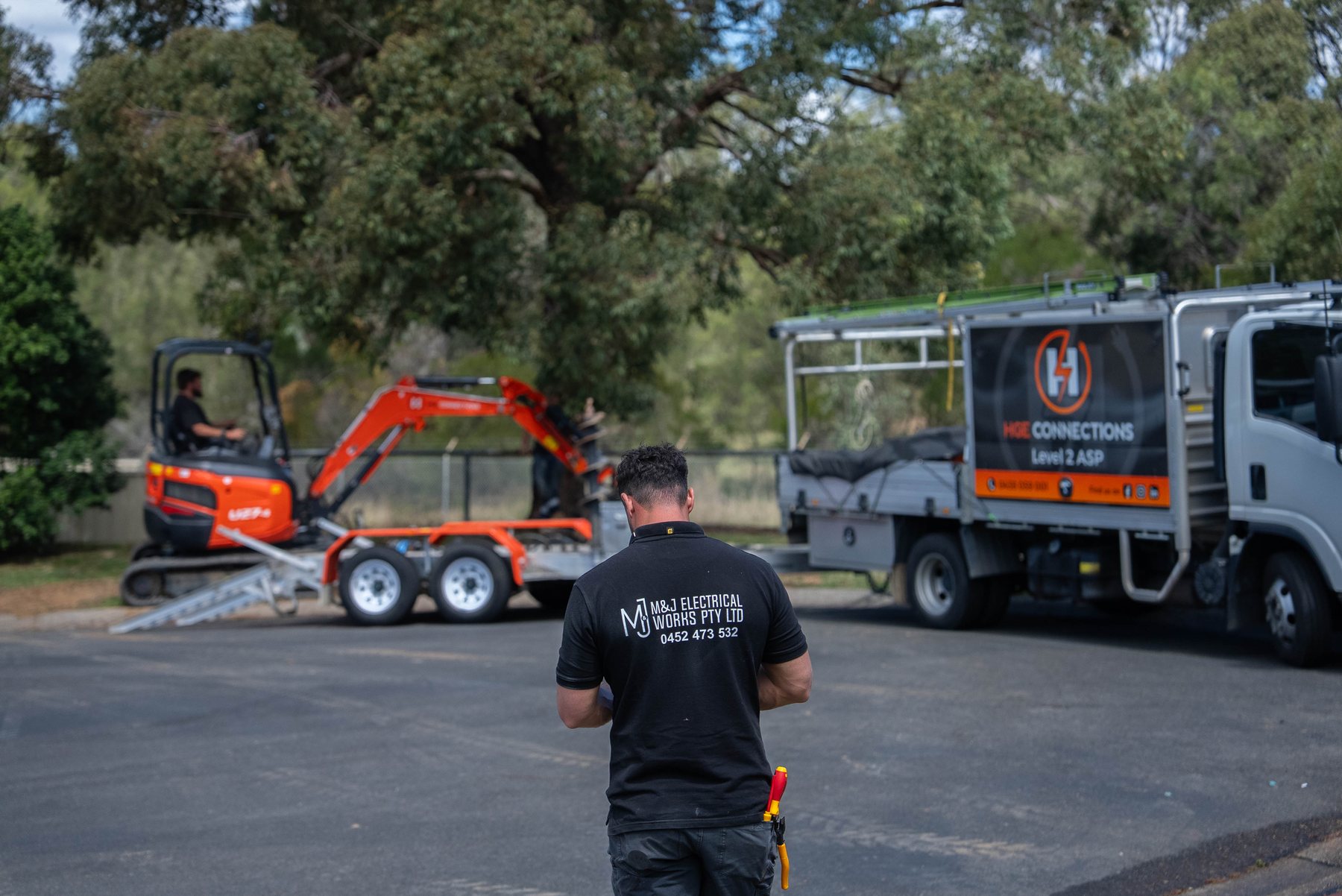
What we found under the driveway
The existing consumer mains, the cable that brings supply from the street into the house, ran underground beneath a concrete driveway.
When we exposed it, the cable was twisted around a pipe under the driveway and direct buried with no adequate conduit protection around it. Our best read is that it was damaged during earlier works on the neighbouring driveway, though we cannot say that for certain.
A cable in that condition cannot simply be pulled out and a new one pulled through, because there was no usable conduit to pull through. So the job grew. We located and exposed the cable route, cut out a section of the concrete driveway, excavated, and then rectified and extended the conduit so the new mains had a proper protected path from the street to the meter.
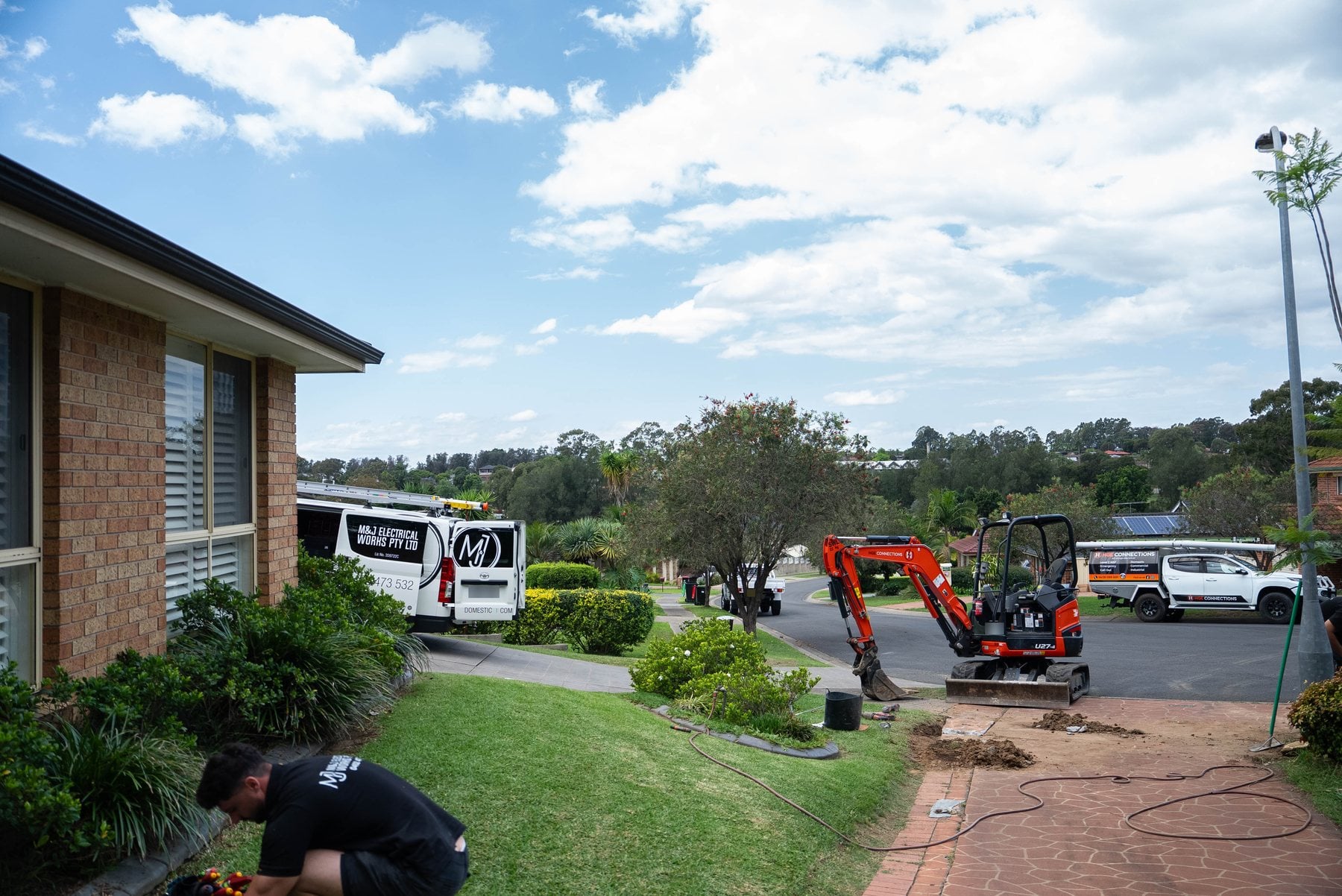
We priced that as a separate variation and had it approved before we started digging. Nobody likes a surprise on an invoice, and the fixed price we quote at the start is the price on the invoice unless the scope changes and you approve the change in writing first.
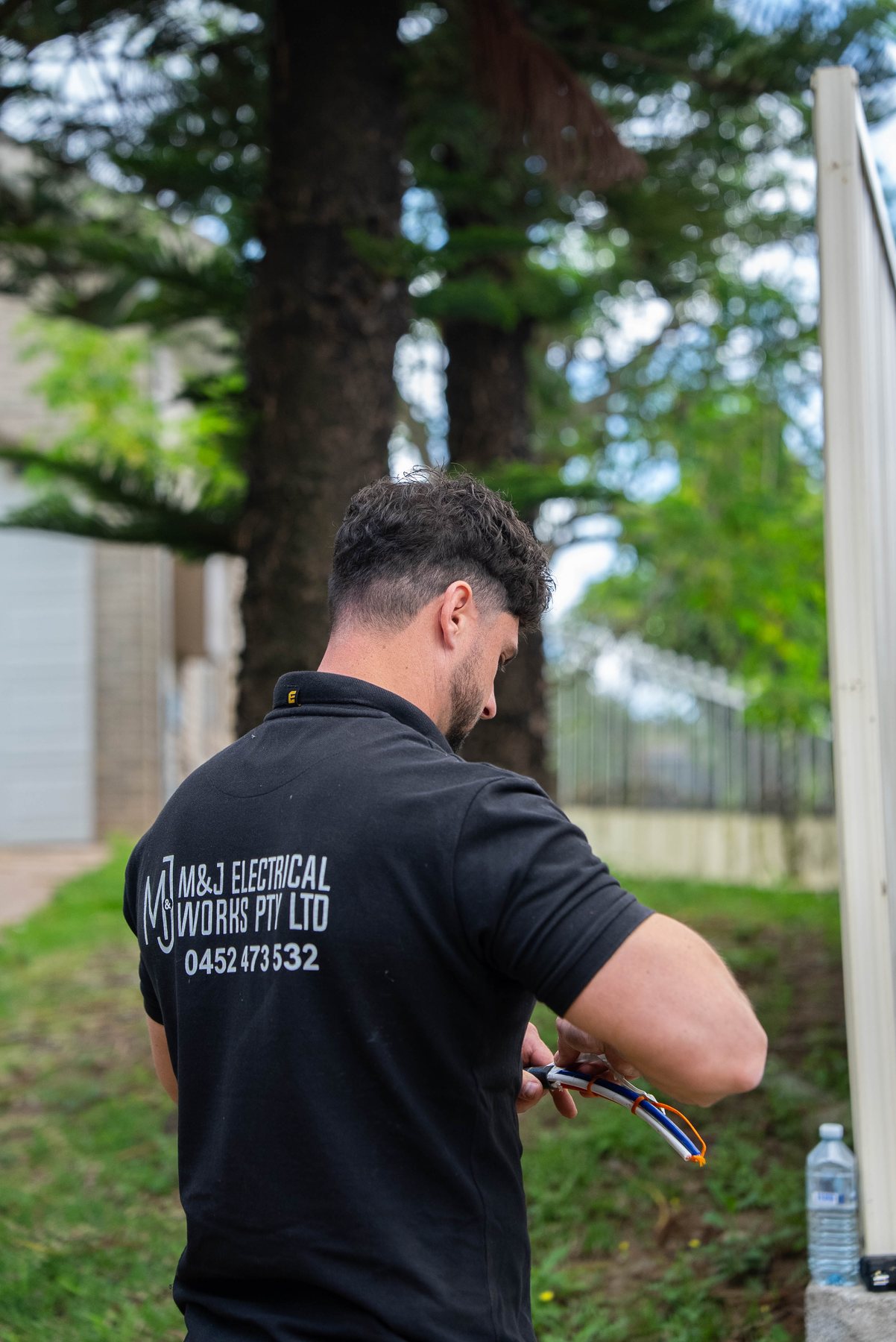
The switchboard had to change too
Three phase supply needs a three phase board. The old single phase board could not take it.
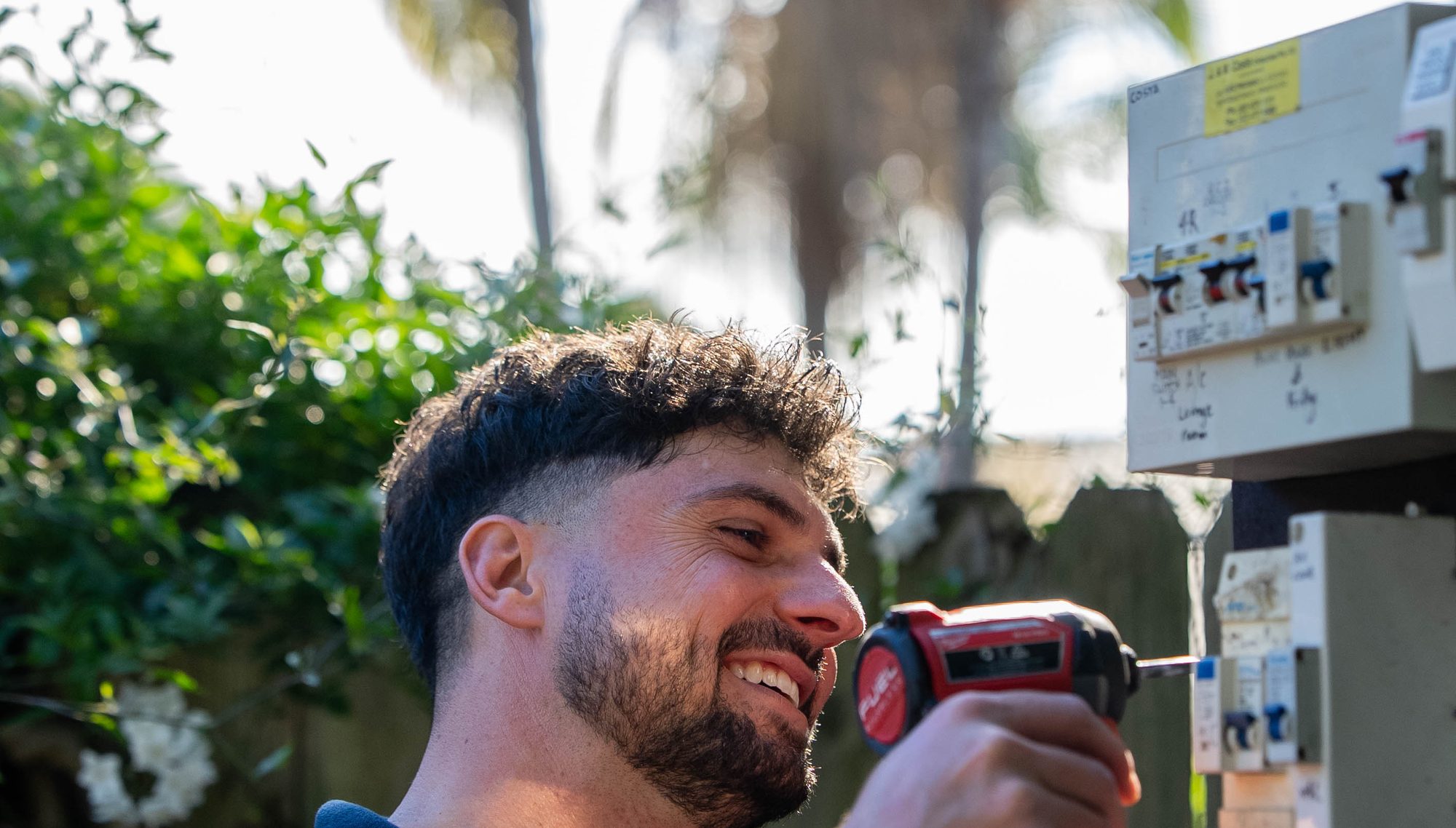
We installed an 18 way surface mounted enclosure with a 63A three phase main switch, three phase busbars, and eleven individual RCBOs so that each circuit has its own combined overload and safety switch protection. That means a fault on the oven circuit trips the oven circuit, not half the house. We also fitted three phase surge protection, which matters more once there is a charger and other electronics connected.
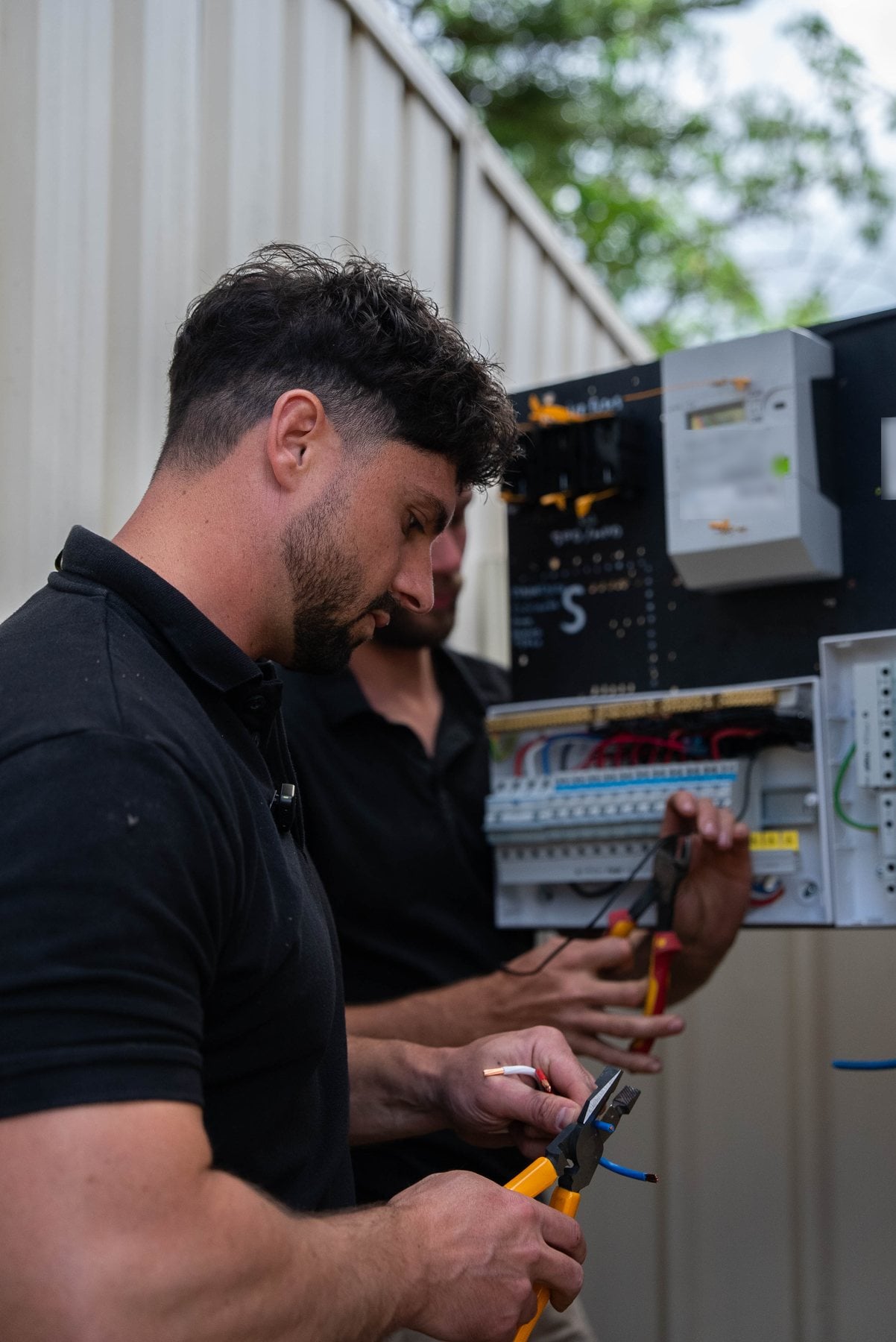
On the supply side, the meter panel was rebuilt for three phase with 100A service fuse holders carrying 80A links.
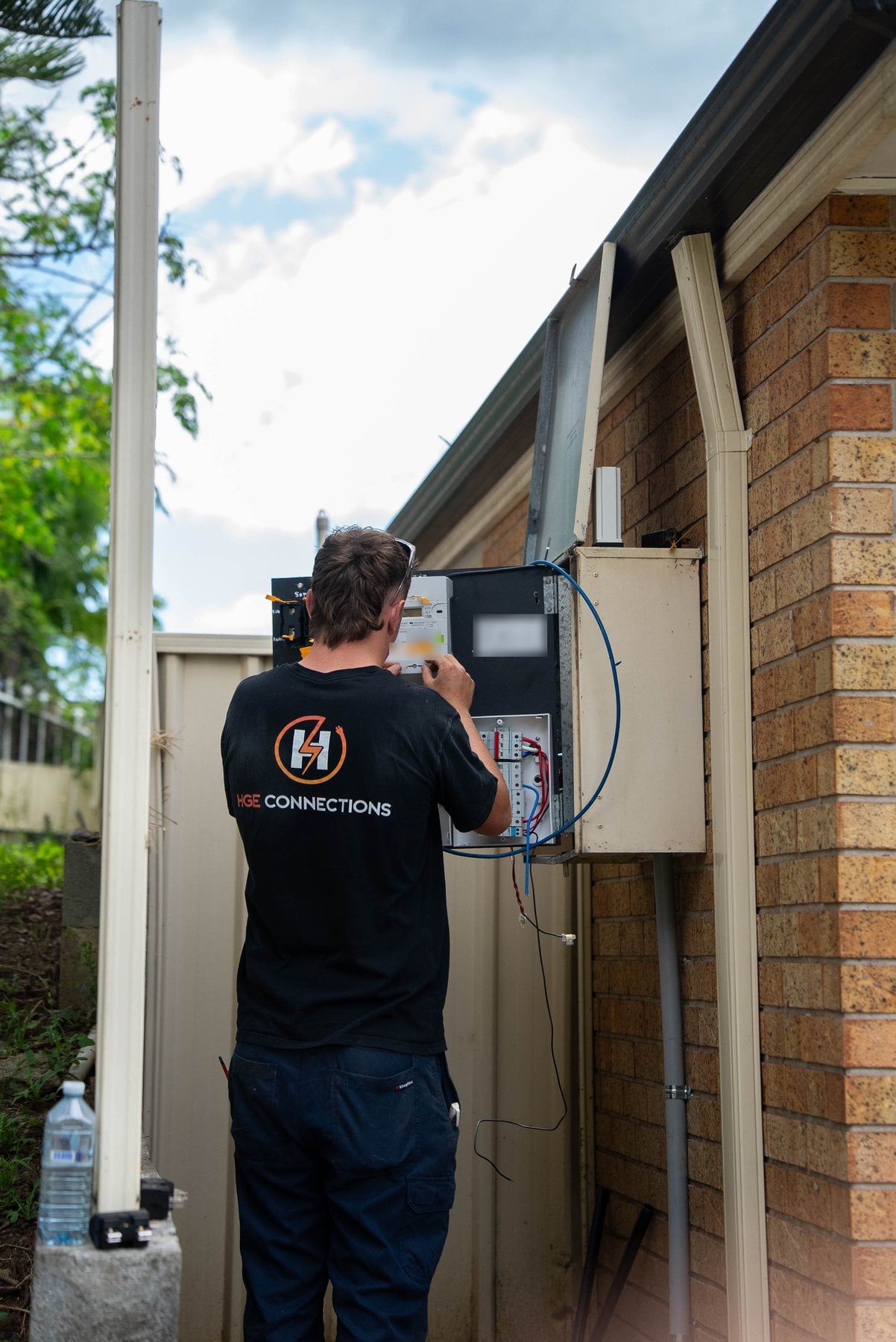
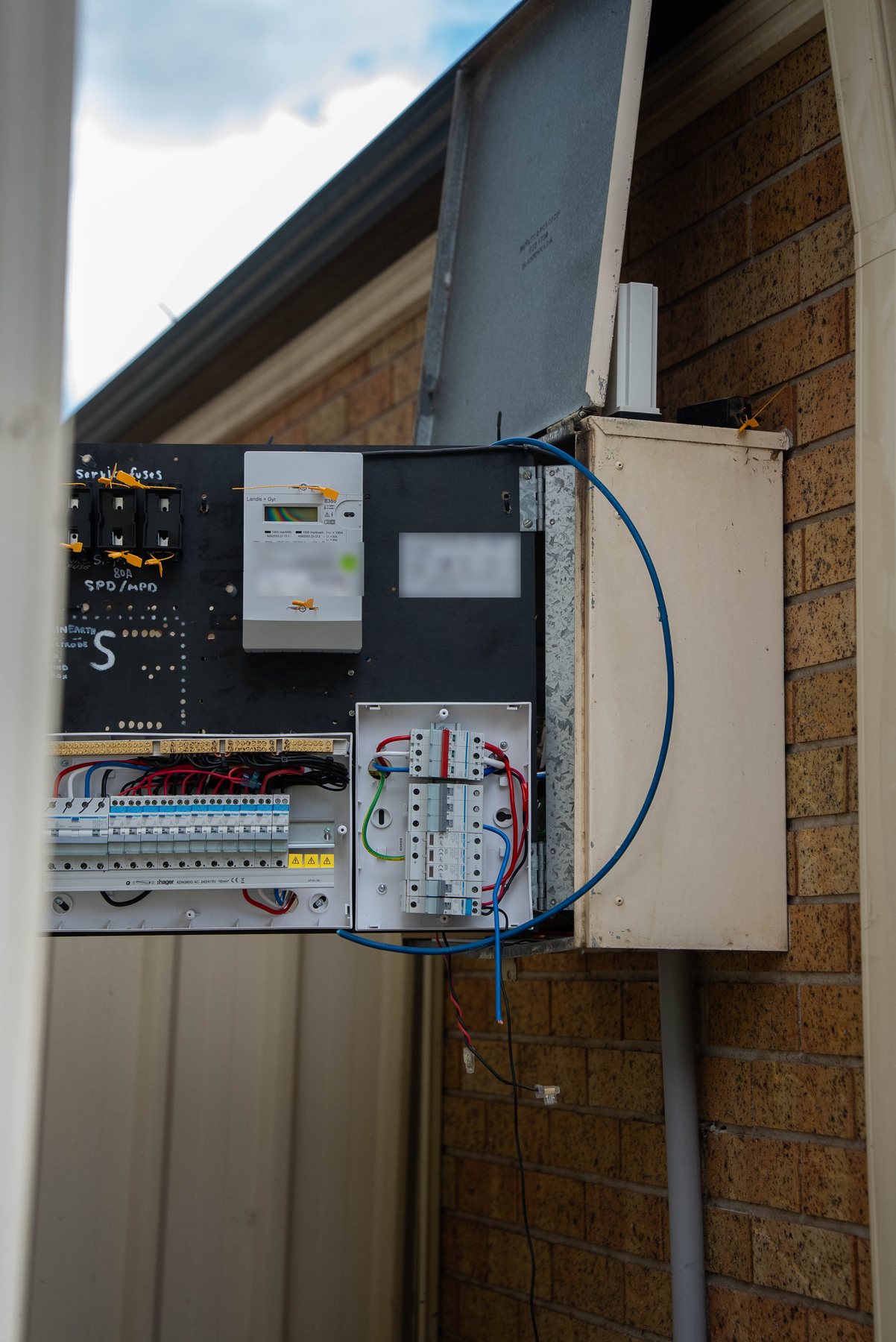
The charger
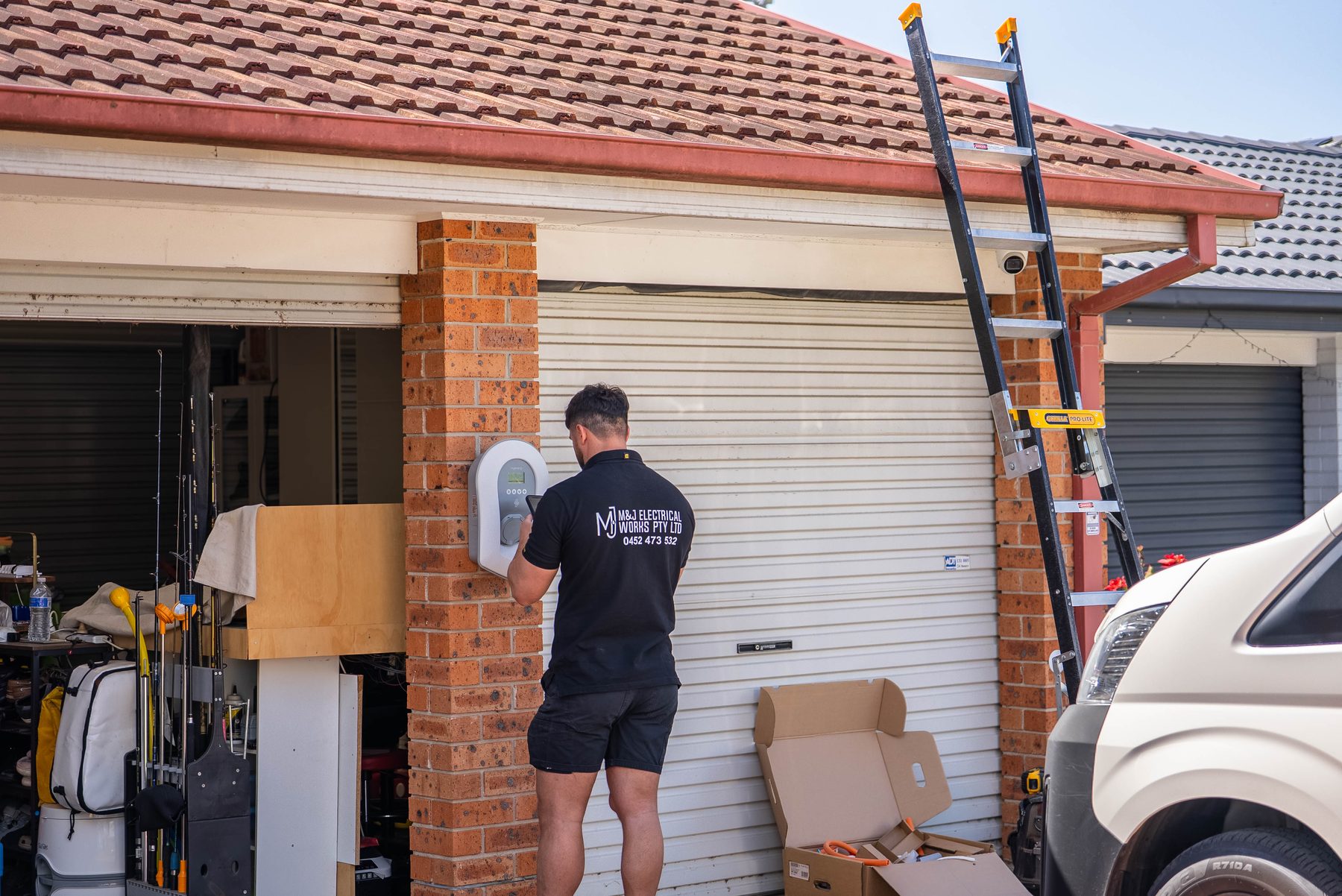
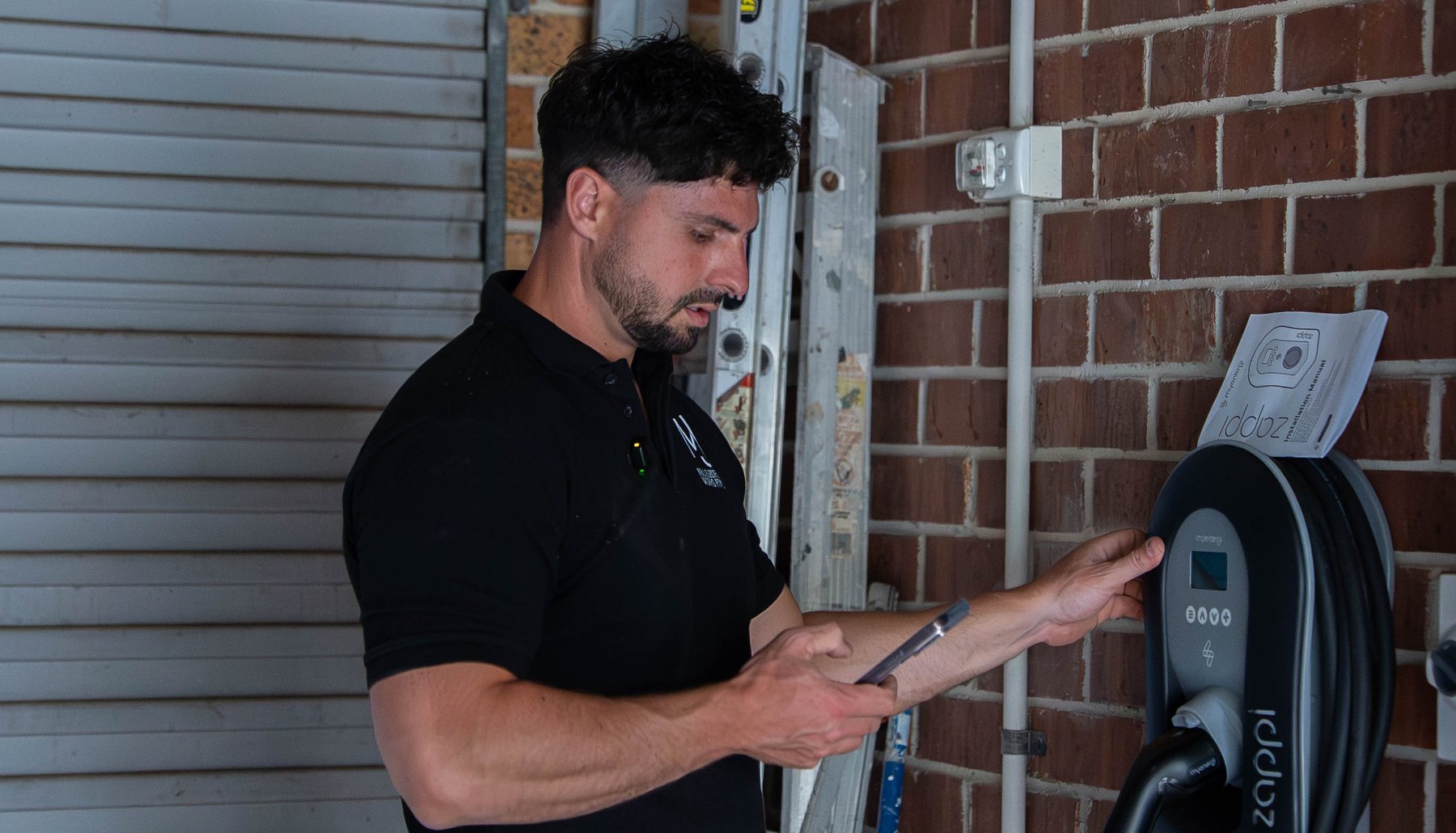
Only then did the Zappi go on. It is the multi-phase tethered unit, fed from a dedicated 40A three phase circuit with its own four pole RCBO, run in 10mm four core and earth orange circular cable to a weatherproof three phase isolator beside the charger.
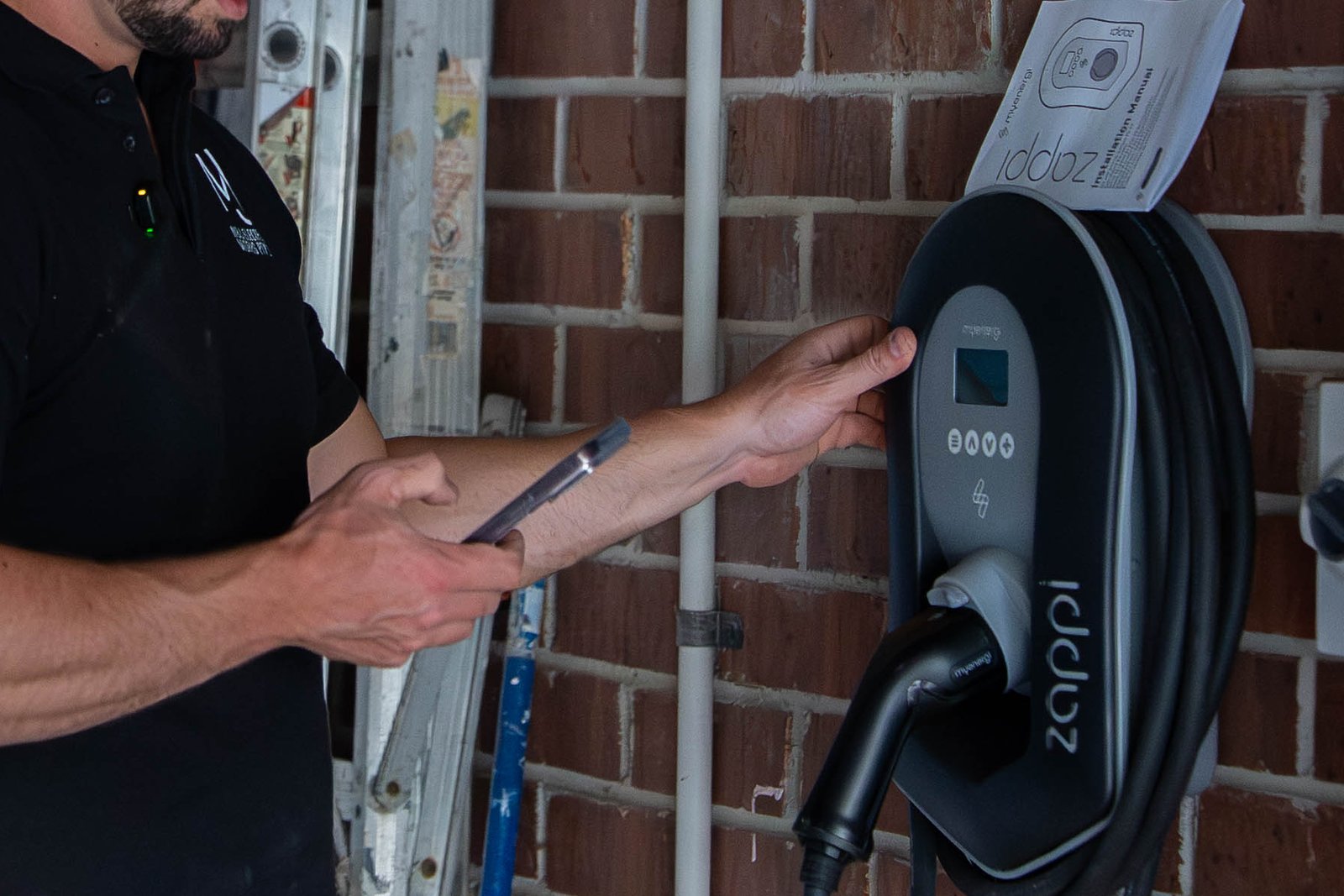
We also fitted the CT clamp. That is the part people skip. The clamp sits on the incoming mains and tells the charger how much of the house’s capacity is already in use, so the charger can throttle itself rather than tripping the main switch when the oven, the air conditioning and the car are all drawing at once.
What the owners got
A three phase supply, a rebuilt meter panel, a new switchboard with individual circuit protection and surge protection, a conduit route under the driveway that is properly protected, and a 22kW charger that works with the house rather than against it.
A compliance certificate was issued for the electrical work and lodged with Building Commission NSW.
If you are thinking about this
Three questions decide whether a job like this is straightforward or not. Does the property already have three phase available at the street. What condition are the existing consumer mains in. And is there a clear path for new cable from the street to the meter.
The only way to answer those is to come and look. If you are weighing up an EV charger and you are not sure what your supply can carry, that is exactly what a paid pre-install assessment is for. We look at the board, the supply and the cable route, and tell you what is actually involved before anyone commits to anything.